
OpenAI Unveils Grid Protectors: Future Campuses Will Yield Power Under Grid Strain, Georgia Pilot Caps Cuts at 1,000 MW
OpenAI launched the Grid Protectors Program on November 2: future self-built campuses will curtail power when the grid is under strain. The Georgia pilot agreement caps flexible response at 1,000 MW, roughly 700,000 households' worth of demand, but the campus is not yet built and clause details are undisclosed.
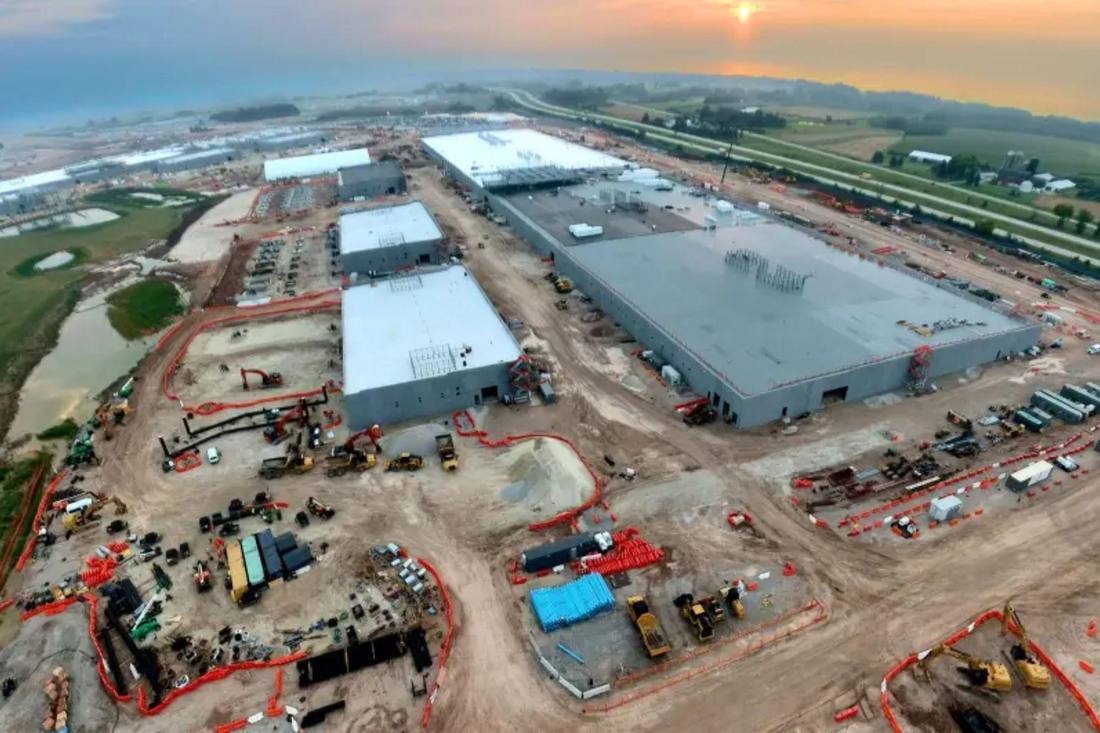
- 01THE ANNOUNCEMENT — OpenAI published its official announcement on November 2, launching the Grid Protectors Program with the Effingham County, Georgia campus as the pilot.
- 02THE CONFIRMATION — The New York Post reported independently the same day; the pilot's scale, the 1,000 MW ceiling and the 700,000-household conversion all check out.
- 03THE WATCHPOINT — Actual curtailment performance after the campus starts up, disclosure of trigger conditions, and whether later campuses adopt similar clauses.
WHAT HAPPENEDWhat Happened
OpenAI announced the Grid Protectors Program on November 2: a nationwide initiative under which future compute campuses developed directly by OpenAI will cut power use when the grid is under strain, with the scale, speed and duration of curtailment negotiated site by site with utilities, regulators and policymakers.
The pilot is a planned campus in Effingham County, Georgia (Project Camellia). OpenAI has committed to paying the full infrastructure and power-service costs of serving the project, and its agreement with Georgia Power includes up to 1,000 MW of flexible demand response — which OpenAI says is equivalent to the average consumption of roughly 700,000 households.
The New York Post reported that the campus totals roughly 3.2 GW, is expected to come online in 2028, and is the only campus OpenAI has planned entirely on its own. Local residents protested over the summer against the roughly $30 billion project.
OpenAI cited a Georgia Power projection that the utility's portfolio of large-load agreements, including Project Camellia, is expected to save customers about $950 million a year from 2029, with a typical residential customer benefiting by at least $15 a month.
OpenAI drew its own boundary in the announcement: campus flexibility is not a substitute for new generation and transmission investment, terms for other campuses have not been published, and details will be disclosed as final agreements are reached.
WHY IT MATTERSData centers shift from pure load to adjustable load
The substance of Grid Protectors is writing data centers into the grid's demand-response system: campuses give back power at peaks and draw more in troughs to spread fixed costs. The backdrop OpenAI cites is US data-center capacity expected to exceed 100 GW by 2030; when grid expansion cannot keep pace with compute growth, adjustable load is a faster buffer than new power plants.
It is also an answer to local opposition. Siting disputes have always turned on whether residents end up paying for compute. OpenAI is trading full self-funding plus curtailment clauses for siting legitimacy, and the Georgia agreement becomes the template and starting point for negotiations at every self-built campus that follows.
WHY IT MATTERSThe commitment is on paper; verification comes after start-up
For now, 1,000 MW is only a contractual ceiling. The campus is not built, and the curtailment triggers, response speed, how many times a year it can be called and for how long have not been disclosed. Georgia Power's $950 million savings projection also covers its entire large-load agreement portfolio, not OpenAI's campus alone.
The real signal comes after the campus starts up in 2028: whether it actually sheds load during the first extreme-weather event, how much it sheds, and whether residents' bills benefit. Until then, Grid Protectors looks more like a siting and public-affairs framework than a proven grid service.
SIGNAL JUDGMENT — ANALYSISTemplate first, verification later
Tokenta Signal's judgment: the signal in Grid Protectors is not the 1,000 MW figure, but OpenAI writing curtailment into the standard terms of its self-built campuses for the first time. If the Georgia agreement is copied to later campuses, the relationship between data centers and the grid shifts from passive consumption to contracted peak-shaving — but delivery waits on the first extreme-weather event after the 2028 start-up.
WHAT REMAINS UNCERTAINWhat Remains Uncertain
EVIDENCEEvidence
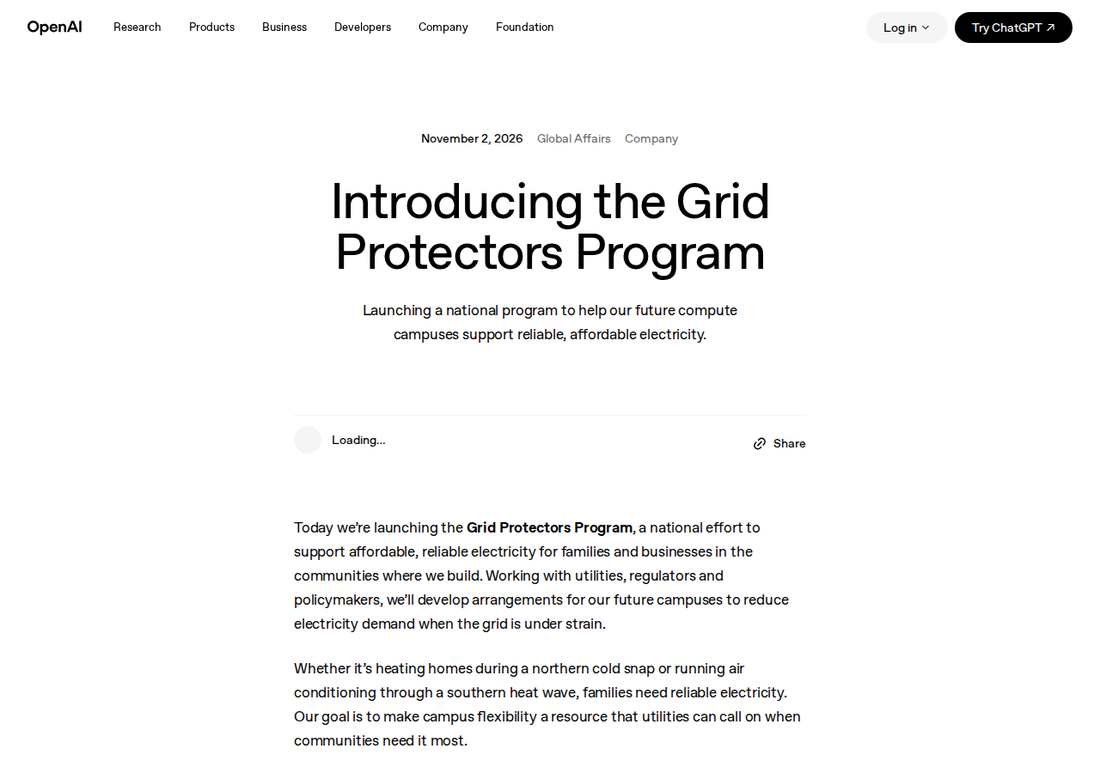
Confirmed by two sources: OpenAI's official announcement and independent reporting by the New York Post. Original links opened and verified.
PRIMARY SOURCESPrimary Sources
- OpenAI official announcement
https://openai.com/index/grid-protectors-program/ - New York Post independent report
https://nypost.com/2026/11/02/business/openai-plans-to-use-less-electricity-when-grid-is-strained-at-this-new-facility/
RELATEDRelated Intelligence
- GlobalFoundries Posts Record 31.4% Margin as AI Packaging Deals Stack Up: $2B TSMC Pact, $21B U.S.-Japan Fabs
- Lambda Pledges $33.1 Billion for Alabama AI Campus, Revealing Itself as Project Red Clay's Tenant
- Kimi K3.1 Pro Weights Land on Hugging Face, Closing Moonshot's November 4 Promise
- Google Pledges $15 Billion for Malaysia Data Centers, With Clean Energy and Skills Attached